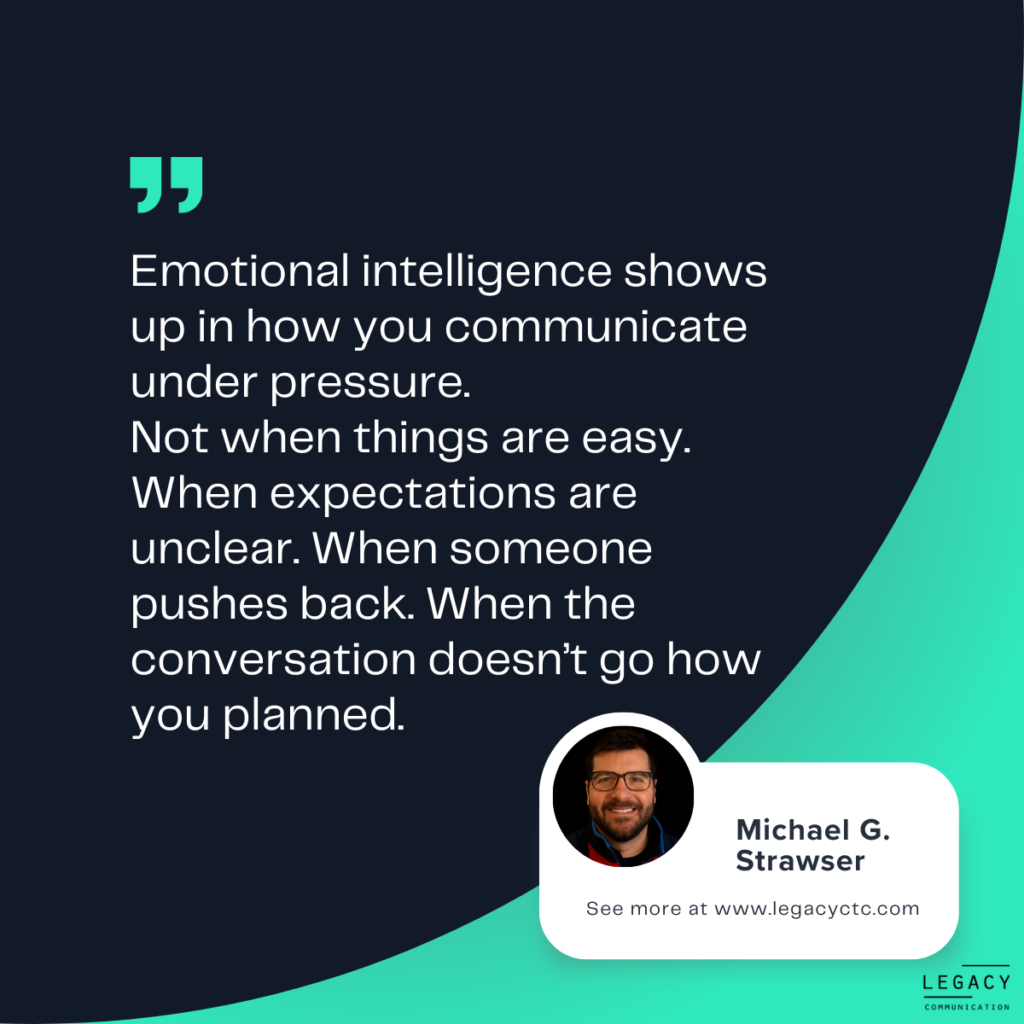
Emotional intelligence in leadership communication is one of the most overlooked reasons teams struggle. Not because leaders lack strategy or experience, but because they misread what is happening in real time. In workplace communication training, this shows up quickly. Leaders react instead of respond, tone gets misinterpreted, and feedback creates tension instead of clarity. The issue is rarely just the message. It is the awareness behind it.
Emotional intelligence in leadership communication directly shapes how messages are delivered and received. When it is missing, team communication breaks down. Conversations feel tense, people assume intent instead of asking for clarity, and small issues turn into larger problems. When it is present, leadership communication becomes more controlled and effective. Messages land the way they were intended, teams stay aligned, and conversations move forward instead of stalling. This is why strong leadership communication skills always include emotional awareness, not just message clarity.
To improve emotional intelligence in leadership communication, leaders need to focus on four practical skills. Self-awareness is the ability to recognize what you are feeling in real time. Without it, communication becomes reactive and inconsistent. Self-regulation is the ability to control your response, which is where leaders either build or lose credibility in conversations. Social awareness involves reading the room, including tone, body language, and what is not being said in team communication. Relationship management is the ability to adjust how you communicate to improve the outcome, not just the moment. These four areas form the foundation of effective organizational communication.
Most leaders are not trained in emotional intelligence in leadership communication. They are promoted for expertise, rewarded for results, and expected to figure out communication on their own. This leads to predictable patterns. Leaders prioritize speed over clarity, assume alignment instead of confirming it, and push through conversations instead of managing them. Over time, this creates friction across teams and weakens overall team communication.
Improving emotional intelligence in leadership communication does not require complicated systems. It requires consistent habits. Leaders can start by pausing before responding, especially in high-pressure conversations, which creates space for intentional communication. Asking clarifying questions instead of assuming intent strengthens team communication and reduces misinterpretation. Slowing delivery when the stakes are high improves how messages are received. Reflecting after key conversations builds awareness over time and leads to stronger leadership communication skills. These are simple adjustments, but they are highly effective in workplace communication training environments.
If you want to strengthen emotional intelligence in leadership communication, start small. Choose one upcoming conversation and focus on awareness instead of perfection. Pay attention to your tone, notice your reactions, and observe how others respond. This shift alone can improve your leadership communication skills more than most scripted techniques because it builds real-time awareness that can be applied across situations.
Emotional intelligence in leadership communication is not about being agreeable or avoiding difficult conversations. It is about being intentional. Leaders who develop this skill improve team communication, reduce unnecessary conflict, and create more consistent organizational communication. If communication feels harder than it should in your organization, the issue is rarely just the message. It is how that message is being delivered and interpreted.
For further insight into leadership communication and emotional intelligence, Harvard Business Review provides research-based articles on leadership effectiveness, and Center for Creative Leadership offers practical tools for improving leadership communication skills.