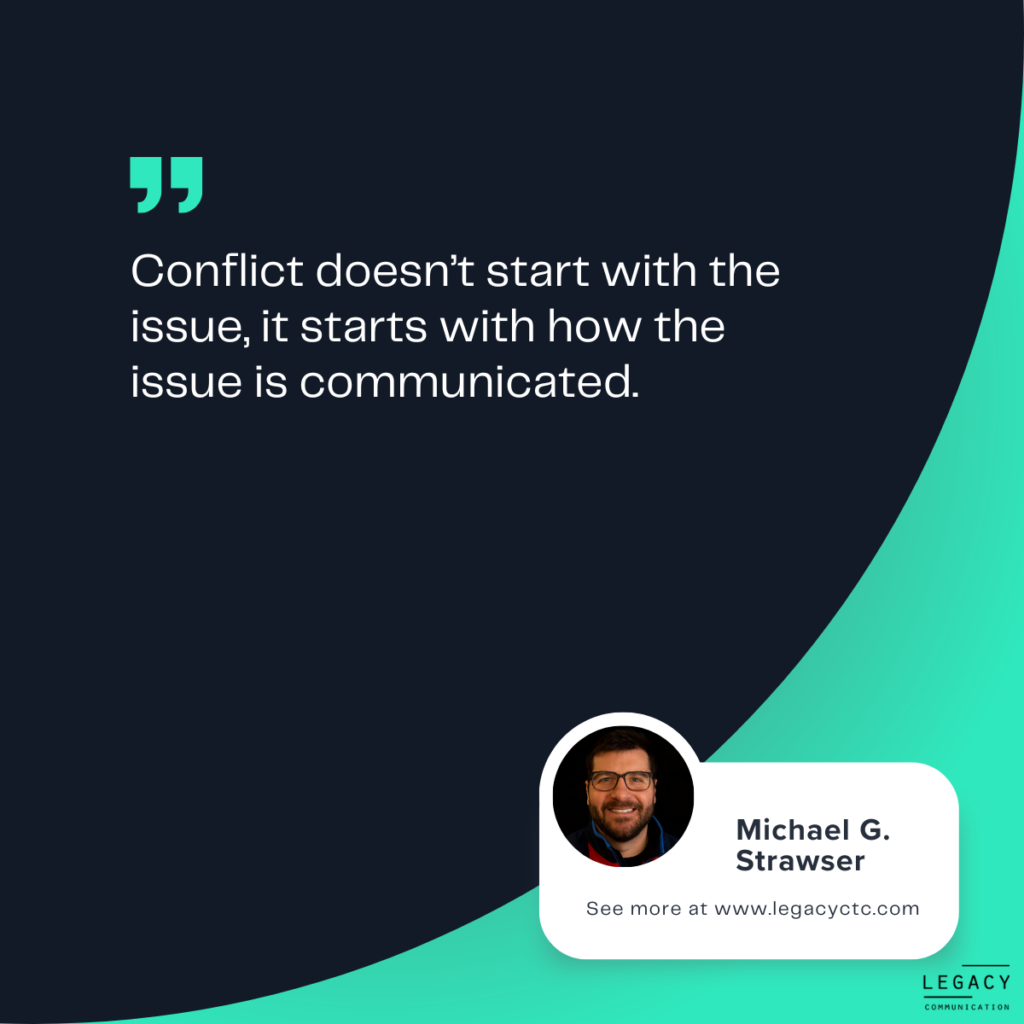
Leadership communication is one of the most important drivers of team performance, yet it is also one of the most common sources of workplace conflict.
Many leaders assume conflict comes from disagreement, personality differences, or competing priorities. In reality, conflict often escalates because leadership communication breaks down in the moment.
When emotional intelligence is low, communication becomes reactive, unclear, and emotionally charged. When it is high, even difficult conversations remain productive and focused.
This is why organizations invest in workplace communication training. The goal is not just to improve clarity, but to improve how leaders handle real conversations under pressure.
How Leadership Communication Breaks Down Without Emotional Intelligence
Leadership communication is not just about delivering information. It is about managing how messages are received.
Low emotional intelligence often leads to predictable communication patterns. Leaders respond too quickly, assume intent instead of asking questions, and allow tone to carry frustration rather than direction.
Over time, these patterns create tension across team communication. Employees begin to hesitate before speaking up, misunderstand expectations, and disengage from conversations.
The result is not just conflict. It is confusion, rework, and lost productivity.
Strong leadership communication prevents these issues by creating consistency in how messages are delivered.
Leadership Communication Mistake #1: Tone Escalates the Situation
Tone is one of the most overlooked elements of leadership communication.
A leader may intend to be direct, but tone can signal frustration, urgency, or disappointment. When that happens, the conversation shifts immediately.
Team members respond to tone as much as content. If the tone feels tense, the conversation becomes defensive.
Effective leadership communication requires leaders to manage tone intentionally, especially during high-pressure conversations.
Leadership Communication Mistake #2: Assumptions Replace Curiosity
Another common breakdown in leadership communication is assumption-making.
Instead of asking a clarifying question, leaders often fill in the gaps. This leads to incorrect conclusions and unnecessary conflict.
In team communication, assumptions create defensiveness. People feel misunderstood, which makes collaboration more difficult.
Strong leadership communication replaces assumptions with simple questions. Asking “Can you walk me through your thinking?” creates clarity and keeps the conversation productive.
Leadership Communication Mistake #3: Reactivity Overrides Clarity
Reactivity is one of the fastest ways to weaken leadership communication.
When leaders respond immediately, they often sacrifice clarity for speed. The message becomes incomplete or emotionally driven.
This creates confusion across team communication. People interpret the message differently, which leads to misalignment.
Effective leadership communication requires a pause. Even a brief moment allows leaders to respond with intention rather than reaction.
Practical Ways to Improve Leadership Communication
Improving leadership communication does not require a complete overhaul.
It starts with a few consistent habits.
Create a pause before responding. This shifts communication from reactive to intentional.
Ask one clarifying question in moments of confusion. This prevents assumptions from shaping the conversation.
Pay attention to tone, especially during difficult discussions. Tone often determines how the message is received.
Slow down your delivery when communicating important information. Clear communication improves when messages are not rushed.
These strategies are simple, but they are the foundation of effective workplace communication training and leadership development.
For additional research on how communication impacts leadership effectiveness, see this article from Harvard Business Review: https://hbr.org/2017/01/what-great-listeners-actually-do
Why Leadership Communication Matters for Organizational Success
Leadership communication is the system that connects every part of an organization.
When communication is inconsistent, even strong systems begin to fail. Messages are interpreted differently, priorities become unclear, and teams lose alignment.
Organizational communication improves when leaders communicate with clarity and consistency.
This is why leadership communication is a central focus in training, consulting, and executive development. It directly impacts team performance, engagement, and results.
If your organization is struggling with repeated conflict or miscommunication, the issue is often not the people. It is the communication.
Closing Insight
Leadership communication is not a soft skill. It is a core leadership function.
Low emotional intelligence creates unnecessary conflict, while strong leadership communication creates clarity and alignment.
Most workplace conflict is not about the issue itself. It is about how the issue is handled.
If you want to improve team communication and reduce conflict, start with how leaders communicate in everyday moments.
If you are looking to strengthen leadership communication in your organization, explore workplace communication training programs or reach out to learn more about consulting and workshops designed for real-world application.